
What Are ETFs and Why They Matter
Exchange-traded funds, or ETFs, have revolutionized the way people invest, offering a flexible and often more affordable entry into the stock market. Unlike individual stocks, which require you to pick specific companies, ETFs bundle together a variety of assets, treating them like a mutual fund that's traded on the stock exchange. This means you can buy and sell ETFs anytime the market is open, just like stocks. One of the main advantages of ETFs is diversification. By investing in an ETF, you're spreading your investment across multiple companies or even sectors, which can reduce risk. Many ETFs also have lower expense ratios than mutual funds, making them a budget-friendly choice for cost-conscious investors. An essential concept to understand is that ETFs trade at a market price that might differ from their net asset value (NAV). This discrepancy can affect your return, so it's essential to monitor these variations. The popularity of ETFs continues to grow, with options available that track almost every conceivable sector, country, and commodity. Their versatility makes them a staple in many portfolios, suited for both beginners and seasoned investors. Whether you're looking to gain exposure to a broad market index like the S&P 500 or a niche sector like renewable energy, there's likely an ETF that meets your needs.

ETFs vs. Mutual Funds: Key Differences
While ETFs and mutual funds might seem similar, they have distinct differences that can impact your investment strategy. One major difference is how they're traded. ETFs can be bought and sold throughout the day like stocks, which gives investors the flexibility to react to market conditions in real-time. On the other hand, mutual funds are only traded at the end of the trading day, based on their calculated NAV. This daily pricing in mutual funds can be favorable if you're looking for a set-it-and-forget-it approach. Another point of contrast is cost. Generally, ETFs are known for lower expense ratios compared to mutual funds. These fees can eat into returns over time, so this is a crucial factor to consider, especially for long-term investments. In terms of management styles, ETFs are predominantly passively managed, aiming to replicate the performance of a specific index. Mutual funds might be actively managed, where a team of experts attempts to outperform market averages. This could mean higher fees but potentially higher rewards. Weighing these factors against your goals and risk tolerance can guide your choice between ETFs and mutual funds. Consider these aspects carefully, and you'll align your investments more closely with your financial objectives.

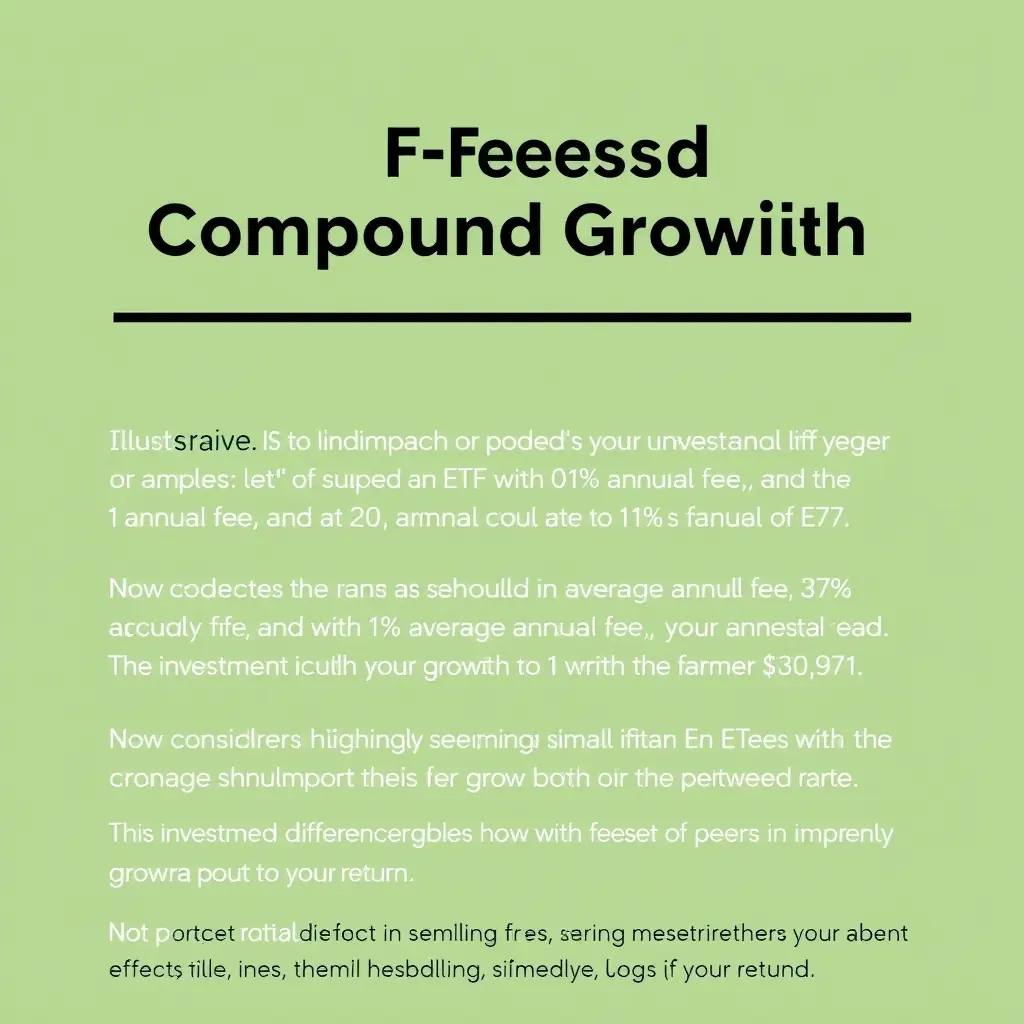
Illustration: ETF Fees and Compound Growth
To understand the impact of fees on your ETFs, let's consider a hypothetical example. Suppose you invest $10,000 in an ETF with a 0.1% annual fee, and it grows at an average annual rate of 7%. After 20 years, your investment could be worth approximately $38,697. Now, consider the same initial investment in an ETF with a 1% annual fee and the same growth rate. After 20 years, the investment might grow to about $32,071. This stark difference highlights how seemingly small fees can significantly impact the growth of your investments over time. The effect of fees compounds similarly to your returns, making them a critical factor in your long-term investment strategy. Being aware of these differences helps in understanding how fees can erode your wealth and why it's vital to choose funds with low expense ratios when possible. ETFs often offer the advantage here, but always research a fund's specific fee structure before investing. This illustration underscores that even a 1% fee can have a pronounced effect over decades, making a good case for seeking out cost-effective investment vehicles whenever you can.
Risks and Considerations of Investing in ETFs
While ETFs offer many benefits, they are not without risks. One potential drawback is volatility, especially in sector-specific or leveraged ETFs that can swing more dramatically with market movements. It's crucial for investors to understand the underlying assets of the ETF and any potential for sudden value shifts. Another factor to consider is liquidity. Some niche ETFs might not trade frequently, leading to potential issues when buying or selling shares. Always check the average daily trading volume of an ETF to gauge its liquidity. Additionally, knowledgeable investing includes awareness of tax implications. While ETFs are generally tax-efficient due to their structure, selling shares can trigger capital gains taxes. Being mindful of these factors can mitigate unwelcome surprises. Lastly, be wary of hype around hot new ETFs. Chasing performance can lead to buying high and selling low—a classic investor pitfall. Instead, focus on aligning ETFs with your long-term investment strategy, risk tolerance, and overall financial goals. Taking the time to understand these potential downsides will empower you to make savvy investment decisions that maximize your returns and minimize unnecessary risks.