
Understanding Investment Fees
When you start investing, it can be tempting to overlook the impact of seemingly small fees. But these fees can significantly eat into your returns over time. Fees like expense ratios, management fees, and trading fees vary based on the type of investment vehicle you choose. An index fund, for example, usually has lower fees compared to actively managed funds. While a 1% fee might seem minor, it can have a substantial effect on the long-term value of your portfolio. To better understand, let’s consider a hypothetical case: an investment of $10,000 with an annual fee of 1%. Over 20 years, assuming an annual return of 5% without fees, you’d have about $26,532. But with that 1% fee, your earnings would drop to roughly $21,865. That's a difference of over $4,600. While fees are sometimes necessary, it's essential to know how much you're paying and what you're getting in return. Lowering your fees, even slightly, can yield considerable benefits in the long run.

The True Cost of High Fees
Many investors don't realize that high fees are like termites eating away at their gains. Over time, excessive fees can accumulate and reduce your investment's potential. For instance, actively managed mutual funds often come with higher fees due to frequent trading and a professional manager's salary. If the fund doesn't outperform its benchmarks, you’re essentially paying for nothing. It's crucial to examine the cost structure of any fund before investing. Consider the same $10,000 investment example but with an annual 2% fee. Your initial $10,000 would grow to about $21,725 over 20 years with a 5% return, but it shrinks further to approximately $18,800 with that higher fee. That $2,925 difference highlights why understanding these costs is paramount. High fees might be justified if the returns outperform benchmarks by a broad margin, but that's often not guaranteed. As an investor, diligently compare cost versus returns to ensure you're making an informed choice.

Fee Structures in ETFs vs. Mutual Funds
ETFs (Exchange-Traded Funds) and mutual funds are common choices for diversified portfolios, but their fee structures can differ dramatically. ETFs tend to have lower fees because they are passively managed, tracking an index without frequent trading. This lowers costs like trading fees and management fees. In contrast, mutual funds may employ active strategies with regular trading, incurring higher fees. To visualize, consider two $10,000 investments, one in an ETF with a 0.1% fee and the other in a mutual fund with a 1.5% fee. After 20 years at a 5% return, the ETF grows to approximately $26,293, while the mutual fund grows to about $21,184. That $5,000 difference underscores the importance of choosing the right investment vehicle for your financial goals. It's not just about observing the market; understanding these intrinsic cost factors is crucial for any investor aiming for long-term success.
How to Minimize Investment Fees
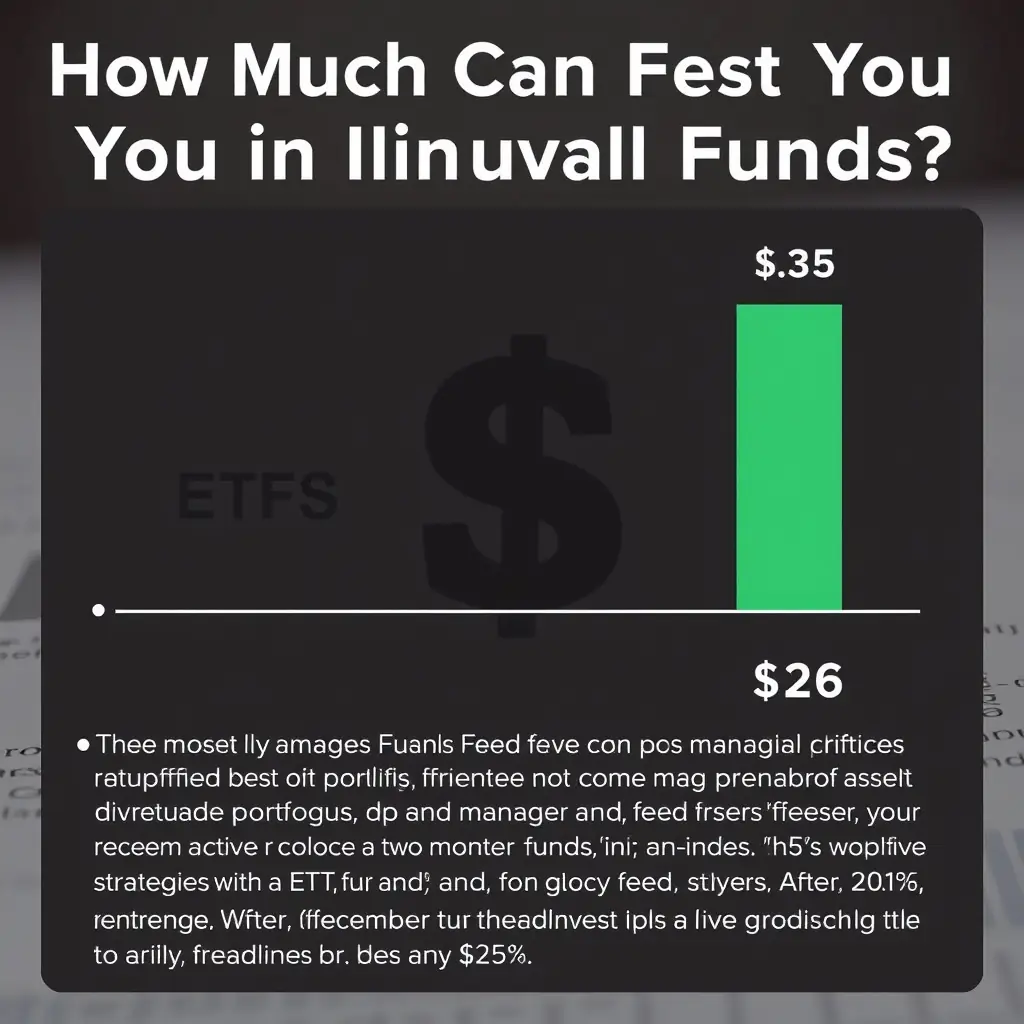
Reducing investment fees is an effective way to maximize your returns. Start by scrutinizing where you're currently investing. Index funds and ETFs generally offer lower fees, making them a great starting point for fee-conscious investors. Consider automating your investments in platforms that offer lower transaction fees or even zero-fee trades. Reevaluate your broker and opt for one that offers a fee schedule aligned with your investment strategy. Additionally, consolidating multiple small accounts into a larger one might lead to reductions in administrative fees. Using tax-advantaged accounts like IRAs can also help mitigate the tax-related cost. Remember that keeping more of your returns starts with actively managing what you’re paying. Becoming fee-savvy doesn’t require a finance degree; it’s about asking the right questions and understanding what each fraction of a percent represents over time. As you lower these costs, you improve your chances of achieving your financial goals without excess waste.